
2026-10-08 · Marco Ramirez
Seasonal Pest Changes in Miami: A Year-Round Guide for Homeowners
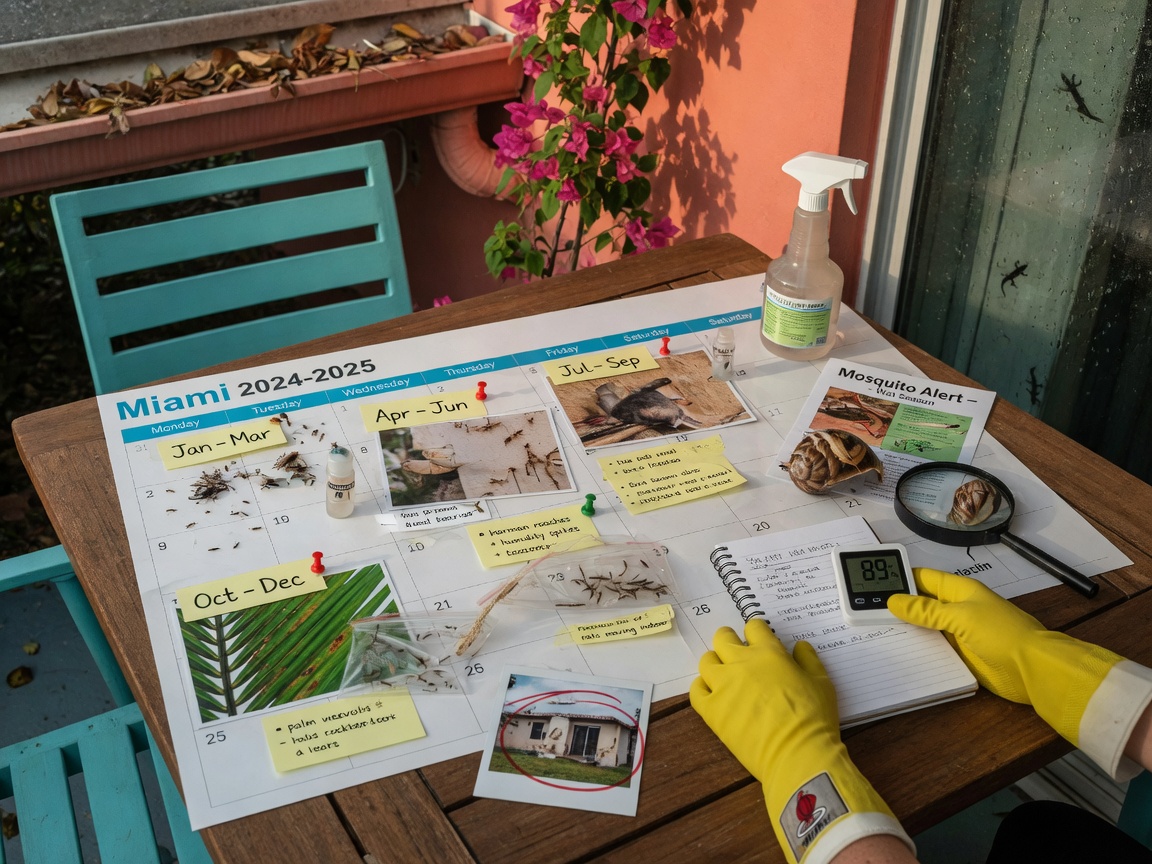
In Miami-Dade County, pest activity is a year-round concern, but the types of pests and their intensity fluctuate significantly with our distinct tropical monsoon climate, which brings hot, wet summers and drier, milder winters. Homeowners in neighborhoods like Brickell, Wynwood, and Little Havana often observe a surge in mosquito and cockroach populations during the summer months, while rodent issues can become more pronounced as temperatures slightly drop, prompting them to seek shelter indoors. Effective pest management in our area, from Coral Gables to Overtown, requires a proactive approach that anticipates these seasonal shifts rather than simply reacting to infestations as they occur. Ignoring these patterns can lead to persistent problems, such as cockroach infestation in kitchens or mosquito infestation in yards, making prevention a critical component of home maintenance.
Spring: The Awakening of Termites and Ants
As Miami transitions from its relatively drier winter into spring, usually around March and April, the increasing warmth and humidity signal the start of heightened activity for several key pests. This is particularly true for termites, especially subterranean species, which often initiate their swarming flights after spring rains. Homeowners in areas with older housing stock, such as Coconut Grove or near Bayside Marketplace, should be especially vigilant for signs like mud tubes or discarded wings, as these indicate a potential termite infestation. Our climate, with its consistent warmth and ample moisture, provides an ideal environment for these wood-destroying insects to thrive, making springtime inspections crucial. Beyond termites, ant colonies also become more active, foraging widely for food and often making their way indoors, particularly into kitchens, as they expand their territories.
Summer: Mosquitoes, Cockroaches, and Intense Humidity
Miami's summer, characterized by hot temperatures and heavy rainfall from June through September, creates a perfect breeding ground for many pests. Mosquito populations explode during this period, turning outdoor spaces in places like the Design District or near Marlins Park into uncomfortable zones. Standing water, even in small amounts, becomes a prime location for mosquito larvae to develop, making diligent water management around your property essential. Simultaneously, cockroaches, particularly American and German varieties, thrive in the high humidity and heat, often seeking refuge inside homes. These resilient pests can quickly establish large populations, especially in areas with food and moisture sources, such as kitchens and bathrooms. The constant battle against these summer pests requires consistent effort and often professional intervention to keep them at bay.
Fall: Rodents Seek Shelter and Spiders Flourish
As the intense summer heat begins to recede slightly in October and November, and while temperatures remain warm, Miami experiences a subtle shift in pest dynamics. This period often sees an increase in rodent activity as rats and mice begin to seek more stable, sheltered environments for nesting, moving into homes and businesses in areas like Downtown Miami and near the Freedom Tower. Attics, wall voids, and crawl spaces become attractive havens for these unwelcome guests, who can cause significant damage to wiring and insulation. Furthermore, cooler temperatures, even if slight, can prompt spiders to move indoors, seeking warmth and prey. While most spiders in our region are harmless, their increased presence can be unsettling for many homeowners. Addressing potential entry points and maintaining a clean, clutter-free environment are important steps during this transitional season. You can learn more about managing these issues in our article on Rodent Control in Miami: Keeping Rats and Mice Out of Your Home.
Winter: A Brief Respite, But Pests Remain Active
Unlike many other parts of the country, Miami's winter, from December through February, does not bring a complete halt to pest activity. While some insect populations may decrease, the mild temperatures mean many pests remain active, albeit at a reduced rate. Rodents continue to be a concern, as they've already established themselves indoors during the fall. Termites, particularly drywood termites, are still active, and their colonies continue to grow, albeit more slowly. Even mosquitoes, while less prevalent, can still be found in sheltered areas, especially during warmer spells. This makes year-round pest control essential in Miami, as there's no true "off-season" for pest management. Regular inspections and preventative treatments are key to ensuring your home, whether in Hialeah or Miami Beach, remains protected throughout the year.
Proactive Measures for Miami Homeowners
Given Miami's unique climate and the year-round nature of pest challenges, a proactive approach is always the most effective. Regular property inspections, sealing cracks and crevices, managing moisture around your home, and maintaining a clean environment are fundamental steps. For instance, ensuring proper drainage around your foundation can significantly reduce moisture that attracts pests like cockroaches and termites. Trimming vegetation away from your home's exterior also removes potential bridges for pests to access your structure. For persistent issues or complex infestations, such as those involving rodents in attic or extensive ant control problems, professional pest control services offer tailored solutions that account for our specific local conditions and pest behaviors. Understanding these seasonal patterns is the first step toward a pest-free home in Miami.